What Is a Rebreather and How Does It Work?
Most divers learn to dive using open-circuit scuba. You breathe from a cylinder and exhale into the water. A rebreather works differently. Instead of releasing every breath as bubbles, it keeps most of the gas inside the system, removes carbon dioxide, replaces the oxygen that has been consumed, and allows the remaining gas to be breathed again. Understanding that process is the first step to understanding how a rebreather works.
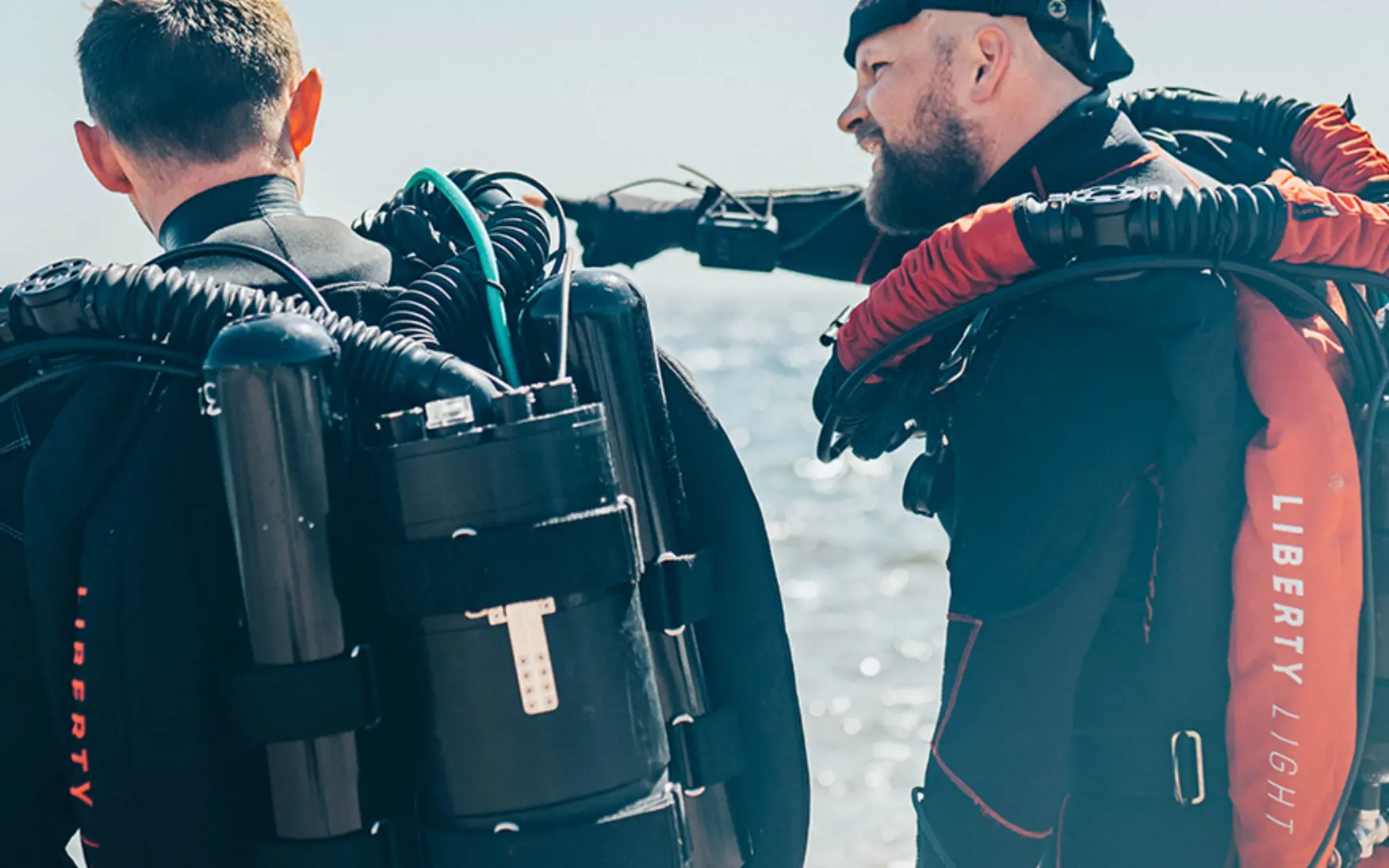
What Is a Rebreather?
A Rebreather is a breathing system that recycles the gas a diver exhales. Rather than discarding the gas after a single breath, it processes the gas and returns it to the diver.
This approach reduces gas consumption significantly compared to open-circuit scuba. The principle itself is simple.
Reuse the gas instead of throwing it away.
Making that happen safely underwater requires several components working together.
New to rebreathers? > Rebreather vs Open Circuit: What's the Difference?
What Happens to Every Breath?
At the surface, the air we breathe contains approximately 21% oxygen. During each breath, only part of that oxygen is consumed by the body. The remaining oxygen is exhaled together with carbon dioxide, water vapour, nitrogen, and other gases.
In open-circuit scuba, the entire breath is released into the water.
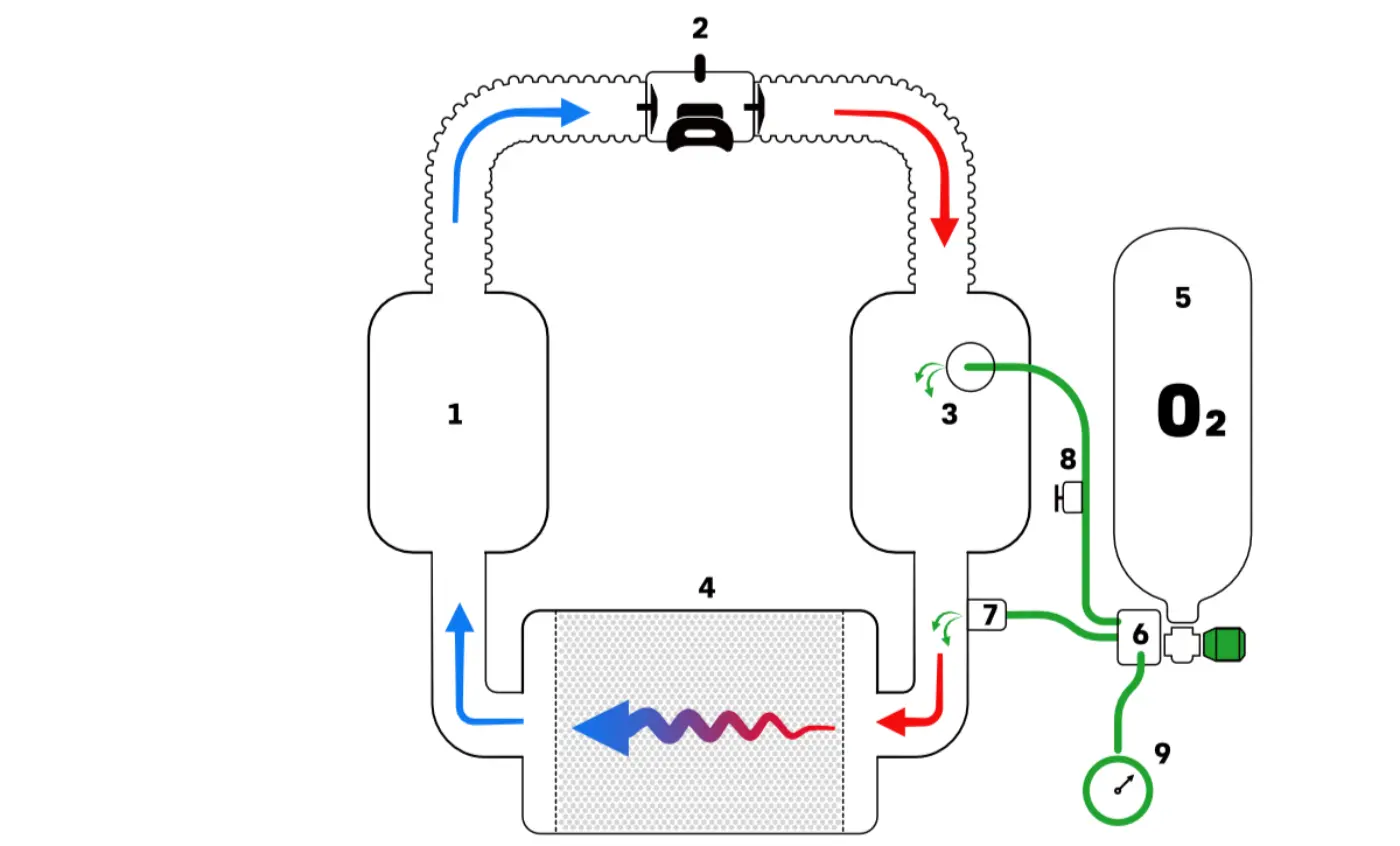
A rebreather takes a different approach. When the diver exhales, the gas remains inside a closed breathing loop rather than leaving the system. Before it can be breathed again, carbon dioxide must be removed and the consumed oxygen replaced.
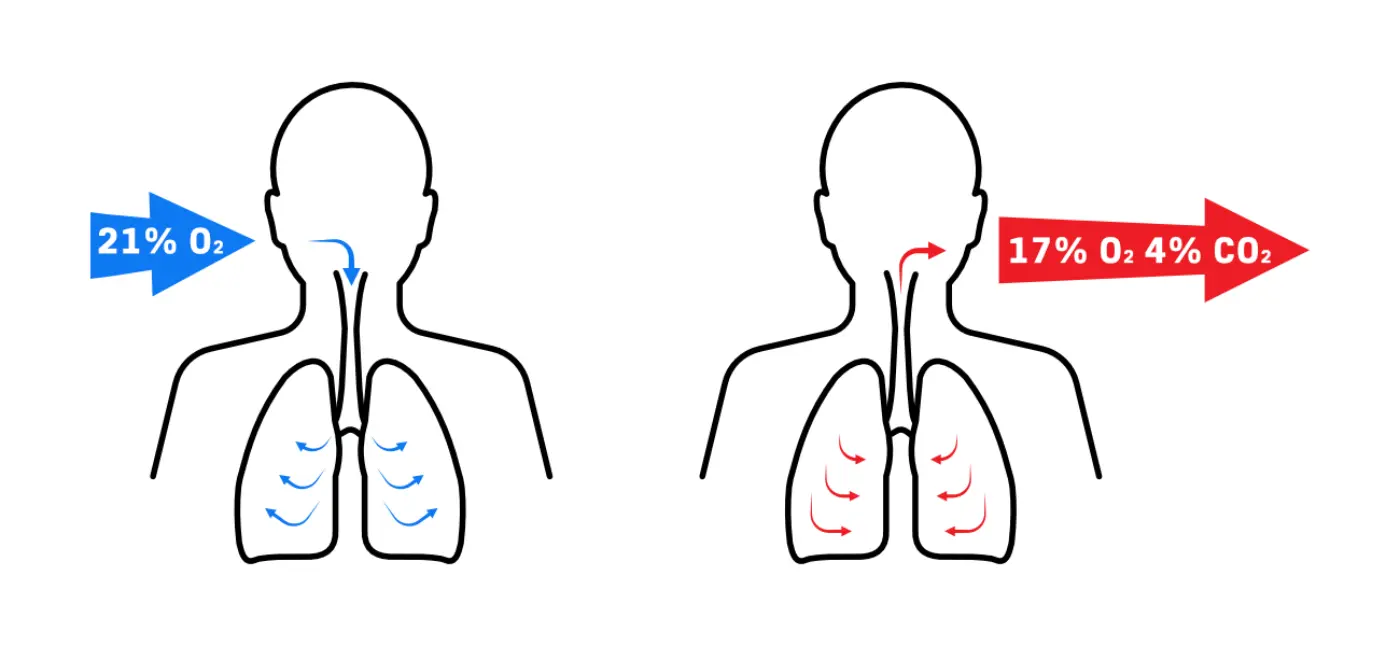 Figure 1 Inhale and Exhale
The Breathing Loop
The breathing loop is the pathway through which gas circulates inside the rebreather.
As the diver breathes, gas moves continuously through the loop. One side carries exhaled gas away from the diver. The other side delivers processed gas back for inhalation.
Counterlungs within the system expand and contract as breathing takes place, helping maintain a comfortable breathing volume inside the loop.
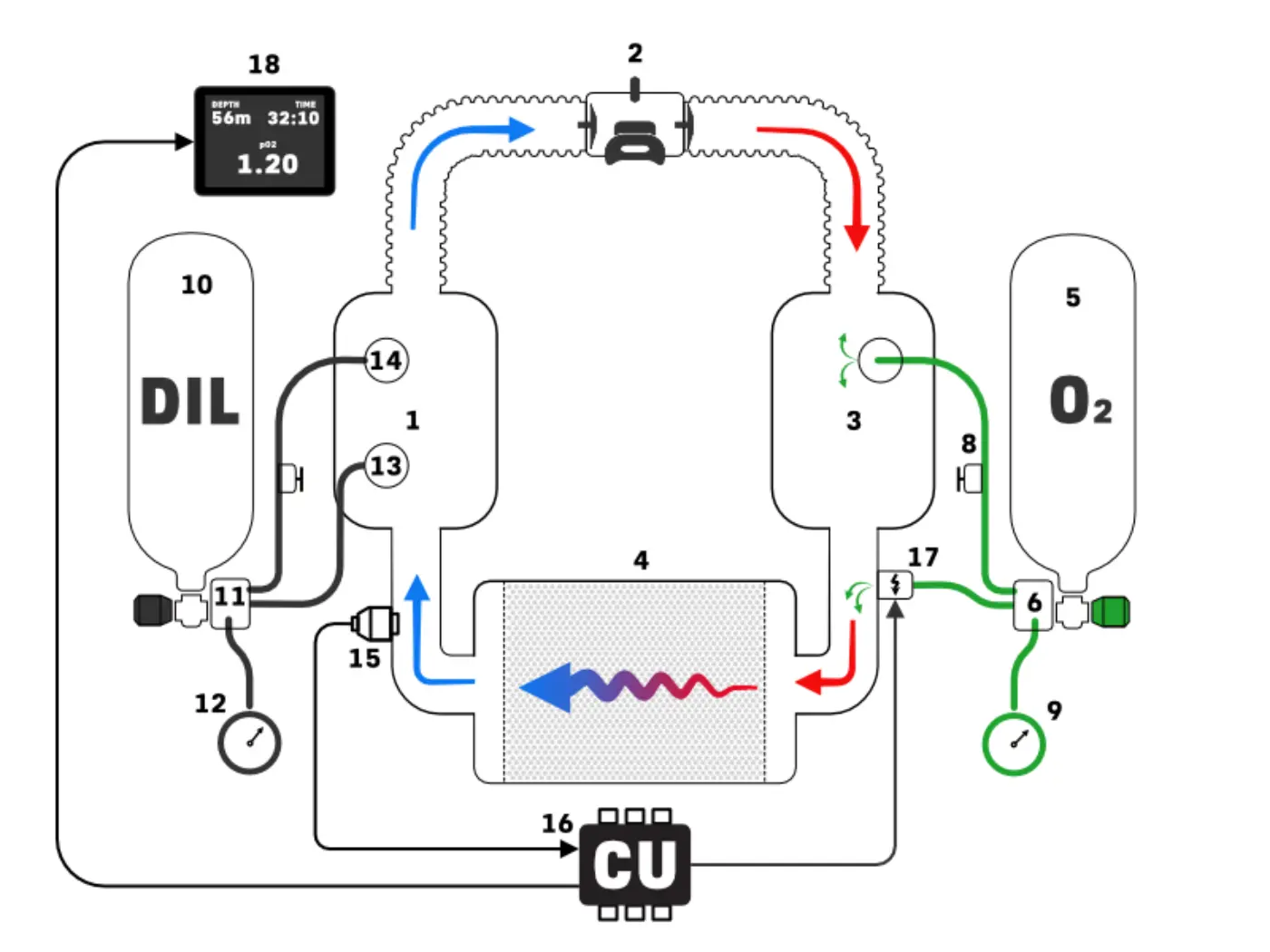
Figure 3 Electronically controlled Closed Circuit Rebreather (eCCR) – 1. Inhale counterlung: this is a flexible bag that the diver inhales gas from; 2. Dive/Surface valve (DSV): valve that directs the gas flow in the loop and opens/closes for the diver to breathe; 3. Exhale counterlung: this is a flexible bag that the diver exhales into; 4. CO2 scrubber: this absorbs carbon dioxide from the exhaled gas; 5. Oxygen supply cylinder; 6. Oxygen reduction valve; 7. Constant flow nozzle: this feeds oxygen into the loop at a set rate 8. Oxygen Manual addition valve (MAV): valve that allows the diver to manually add oxygen if needed; 9. Oxygen SPG; 10. Diluent supply cylinder, 11. Diluent reduction valve; 12. Diluent SPG; 13. Automatic Diluent Valve (ADV): valve that maintains the volume of the breathing loop; 14. Diluent Manual Addition Valve (MAV): valve that allows the diver to manually add diluent and also to control the volume of the breathing loop; 15. Oxygen sensors: critical sensors that measure the oxygen level in the loop; 16. Control unit (CU): this will read the oxygen sensors, calculate the amount of oxygen to be added, and thus controls the solenoid valve; 17. Solenoid: this injects oxygen into the loop according to CU data; 18. Handset: the display informs the diver of the loop pO2 and other important data.
The Carbon Dioxide Scrubber
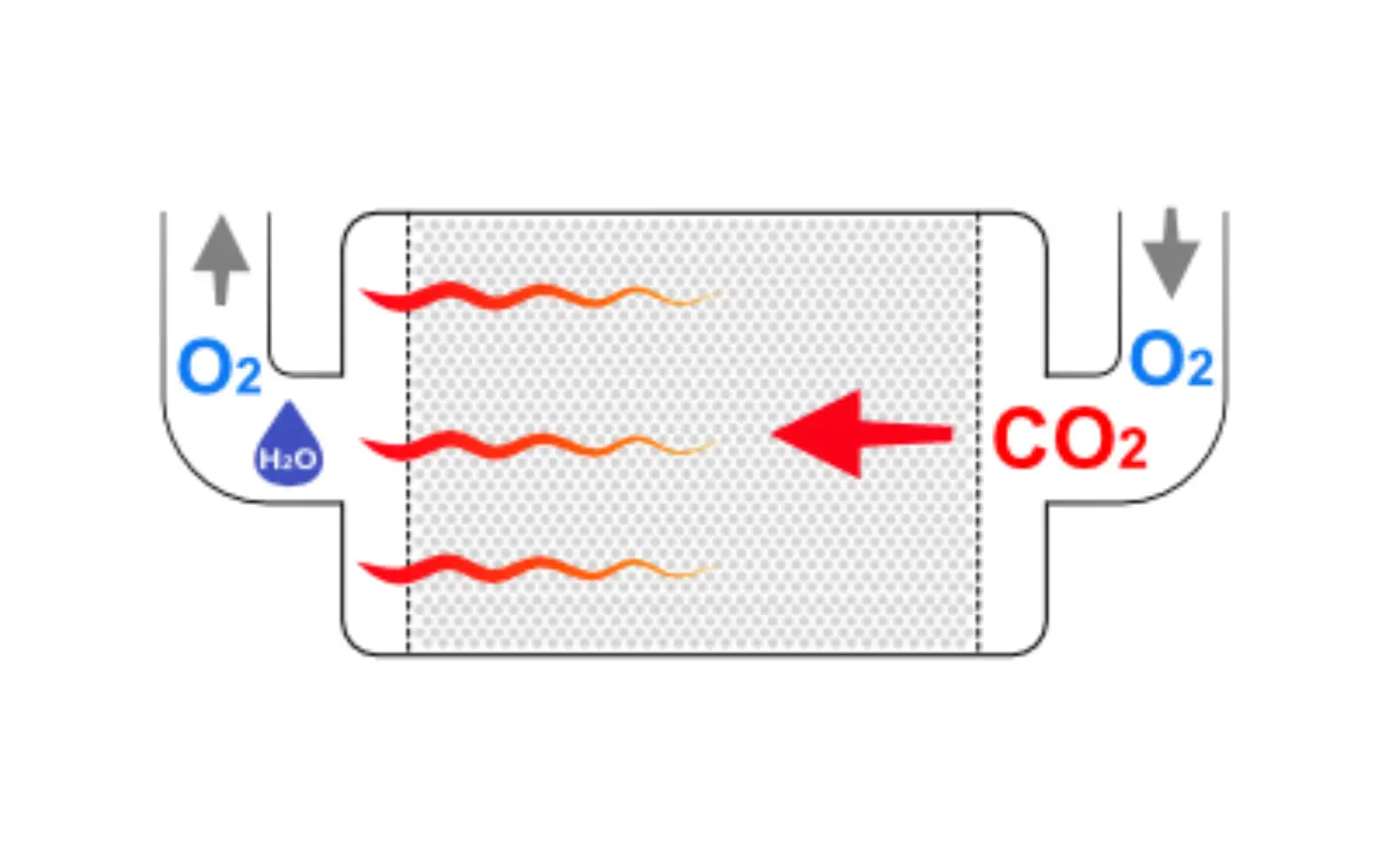
Carbon dioxide removal is one of the most important functions of any rebreather.
Each exhaled breath contains carbon dioxide produced by the body. If carbon dioxide remained in the breathing loop, it would eventually reach unsafe levels.
Inside the scrubber, the gas passes through an absorbent material that removes carbon dioxide before the gas continues through the system. The scrubber allows the remaining breathing gas to stay in circulation.
Why Oxygen Must Be Added
While most of the breathing gas remains in the loop, oxygen does not. The body continuously consumes oxygen during the dive. That oxygen must be replaced to maintain a breathable gas mixture.
In an electronically controlled rebreather, oxygen is added automatically as needed. The amount added depends on the oxygen concentration inside the loop.
Learn why efficient gas management is one of the reasons divers choose CCRs > Why Do Divers Use Rebreathers?
Why Oxygen Sensors Matter
One of the most important components in an electronically controlled rebreather is the oxygen sensor.
These sensors continuously measure the oxygen concentration inside the breathing loop. The information is displayed to the diver and used by the control system. If oxygen levels fall below the selected setpoint, the system adds oxygen to return the mixture to the desired value.
This process continues throughout the dive.
The Solenoid Valve
The component responsible for adding oxygen automatically is called a solenoid. A solenoid is an electronically controlled valve connected to the oxygen supply.
When the control electronics determine that oxygen needs to be added, the solenoid opens briefly and injects oxygen into the breathing loop. The valve then closes again.
This process occurs repeatedly throughout the dive as oxygen is consumed.
What Is Diluent and Why Is It Needed?
A rebreather contains two primary gas supplies. One contains oxygen. The other contains diluent.
Diluent is used to maintain a breathable gas volume inside the loop and to control the oxygen concentration at different depths. Depending on the type of dive, the diluent may be air, nitrox, trimix, or another suitable breathing gas.
Although oxygen receives most of the attention, a rebreather cannot operate correctly without diluent.
Bringing It All Together
A rebreather may appear complex at first, but each component has a specific task.
The breathing loop keeps the gas circulating. The scrubber removes carbon dioxide. Oxygen sensors monitor the oxygen concentration. The solenoid adds oxygen when needed. The diluent helps maintain an appropriate breathing mixture.
Together, these components allow the diver to recycle breathing gas rather than releasing every breath into the water. Understanding how a rebreather works is only part of the story.
One of the most common questions new divers ask is how long a rebreather can stay underwater. The answer depends on oxygen consumption, scrubber duration, workload, water temperature, decompression requirements, and dive planning.
Learn more → > How Long Can You Stay Underwater With a Rebreather?
Explore More About Rebreather Diving
Explore the practical reasons divers choose CCRs, from longer dives and reduced gas consumption to comfort and underwater observation.
Learn how closed-circuit and open-circuit systems manage breathing gas differently and how that affects the diving experience.
Understand the factors that determine dive duration, including oxygen consumption, scrubber duration, workload, and dive planning.
Discover why many CCR divers spend most of their time well within recreational depth limits.
Learn why photographers, filmmakers, and wildlife observers often appreciate quieter dives and longer observation times.
- Author: Divesoft