Analyze Nitrox Correctly Before Every Dive
02/02/2026
Analyzing nitrox is one of those small routines many divers repeat before almost every dive. The process takes less than a minute, but it confirms something essential before entering the water: what gas is actually inside the cylinder. Even experienced divers still analyze their gas personally, because underwater, assumptions are never a good substitute for certainty.
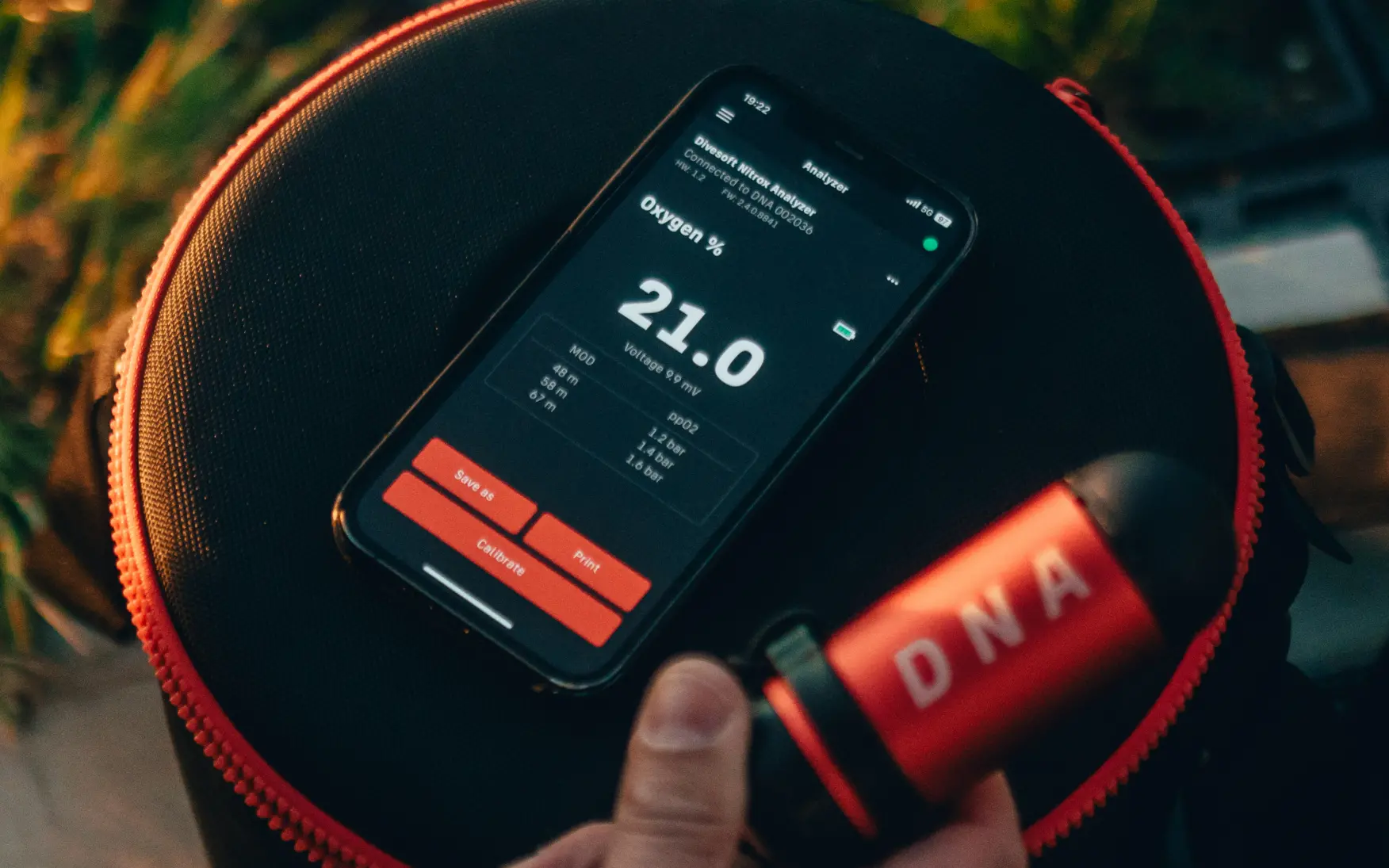
Before entering the water, most nitrox divers perform a quick check to confirm the gas inside the cylinder.
Enriched Air Nitrox (EANx) is any breathing gas with a higher oxygen content than normal air, which contains about 20.9% oxygen. Common recreational mixes include EAN32 and EAN36.
Nitrox can extend no-decompression limits by reducing nitrogen exposure, but the higher oxygen content also creates stricter depth limits. That is why oxygen percentage directly affects maximum operating depth, dive planning, and overall safety underwater.
Experienced divers know this simple routine helps prevent unnecessary mistakes before the dive even begins.
On dive boats, beside rental stations, near compressors, or in the back of a car before heading to the water, the process looks almost the same everywhere. Somebody connects an analyzer, lets the gas flow for a few seconds, writes a number on tape, and passes the cylinder to the next diver.
Most of the time, the routine feels ordinary, and that is exactly the point.
Why Nitrox Analysis Matters
When divers analyze nitrox, they confirm that the oxygen content inside the cylinder matches the planned mix.
For example, a diver planning a dive with EAN32, one of the most common nitrox blends, expects roughly 32% oxygen inside the cylinder. If the actual mix is different, maximum operating depth and decompression planning may change as well.
A diver analyzing EAN32 instead of regular air may suddenly realize the planned depth exceeds the safe oxygen limit for that mix. This becomes especially important when several cylinders are prepared at the same time or when divers switch between air and different nitrox blends during a trip.
Most nitrox incidents are not caused by equipment failure. More often, problems begin with incorrect assumptions, skipped checks, or labeling mistakes. Incorrect analysis may lead to exceeding MOD, increased oxygen toxicity risk, incorrect dive computer settings, or reduced safety margins underwater.
That is why many divers still analyze every cylinder personally, even during familiar dives or repetitive diving days.
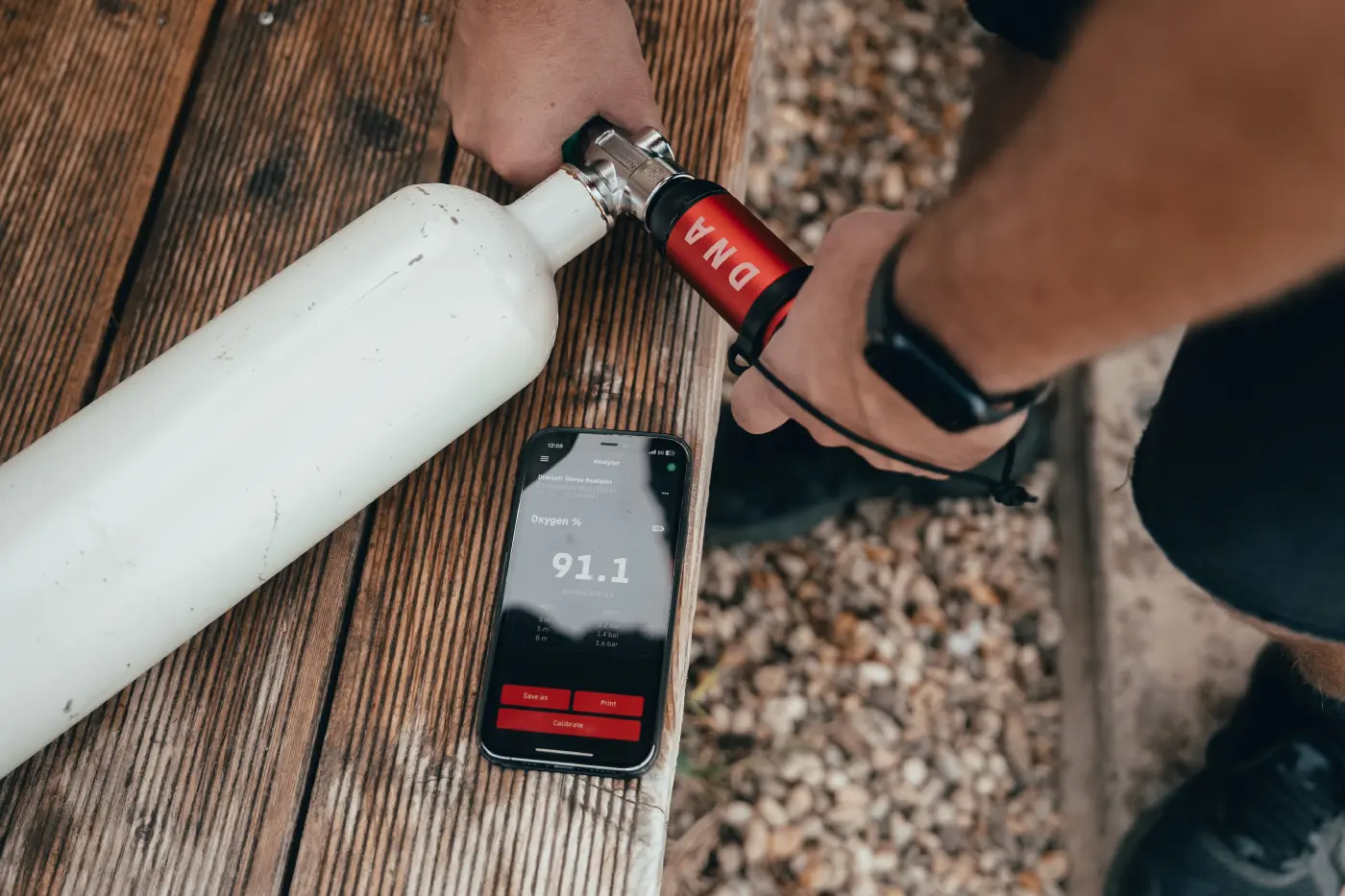 To analyze nitrox correctly, you need reliable equipment designed for diving use.
The Analyzer Is Only Part of the Process
Many divers assume the analyzer itself does all the work. In reality, accurate nitrox analysis also depends on proper procedure.
A poorly calibrated analyzer, unstable gas flow, contaminated sensor, or rushed measurement can all affect the reading. Even small mistakes during analysis may result in incorrect oxygen values.
A flow limiter, such as the Divesoft Flow Limiter Mk2, helps maintain controlled, consistent gas flow across the sensor and reduces the risk of distorted readings.
Experienced divers usually follow the same process every time they analyze gas, not because the procedure is difficult, but because consistency helps avoid unnecessary mistakes.
Maintaining Your Nitrox Analyzer
Analyzer care also matters. Store the analyzer in a dry, cool place, avoid unnecessary exposure to high oxygen concentrations, and replace sensors according to the manufacturer’s recommendations. Regular calibration and proper sensor care help keep oxygen readings stable and reliable.
How to Analyze Nitrox Step by Step
Analyzing nitrox is simple, but the procedure should be consistent every time.
- Turn on the analyzer and allow it to stabilize.
- Calibrate the analyzer according to the manufacturer’s instructions, usually using air as the reference gas.
- Connect the analyzer to the cylinder valve or a flow limiter.
- Open the valve slowly and keep the gas flow stable.
- Wait until the oxygen reading stabilizes.
- Record the measured O₂ percentage.
- Calculate or confirm the MOD for the analyzed mix.
- Label the cylinder with O₂ percentage, MOD, date, and initials.
- Set the verified FO₂ / O₂% in your dive computer and confirm PPO₂ and MOD alarms.
Check the cylinder label again before entering the water.
Final Checks Before Diving Nitrox
Experienced divers often follow a simple routine before every dive:
- Calibrate the analyzer correctly before use.
- Verify a slow, stable gas flow.
- Wait a few seconds for the reading to stabilize.
- Confirm oxygen percentage.
- Write the O₂ percentage, MOD, date, and your initials on the cylinder label.
- Set the verified oxygen percentage in your dive computer and confirm PPO₂ and MOD alarms before the dive.
- Double-check the cylinder before the dive.
Simple habits like these help reduce confusion later, especially during repetitive diving days or trips involving multiple cylinders.
Small Mistakes Can Create Bigger Problems
Most nitrox-related problems do not begin underwater. They usually start earlier during preparation.
A cylinder may be analyzed correctly but labeled incorrectly. Somebody may accidentally pick up the wrong cylinder. The analyzer may not be calibrated properly before use. Gas may flow too quickly across the sensor, affecting the reading.
Individually, these situations may seem minor. Combined together, they can create unnecessary risk before the dive even starts.
Experienced divers understand this very well, which is why nitrox analysis is treated as a normal part of dive preparation rather than an optional extra step.
Modern Nitrox Analyzers
Nitrox analyzers have changed significantly over the years.
Older analyzers were often simple oxygen readers used mainly for recreational nitrox diving. Today, many analyzers offer faster response times, mobile connectivity, logging features, and support for more advanced gas analysis.
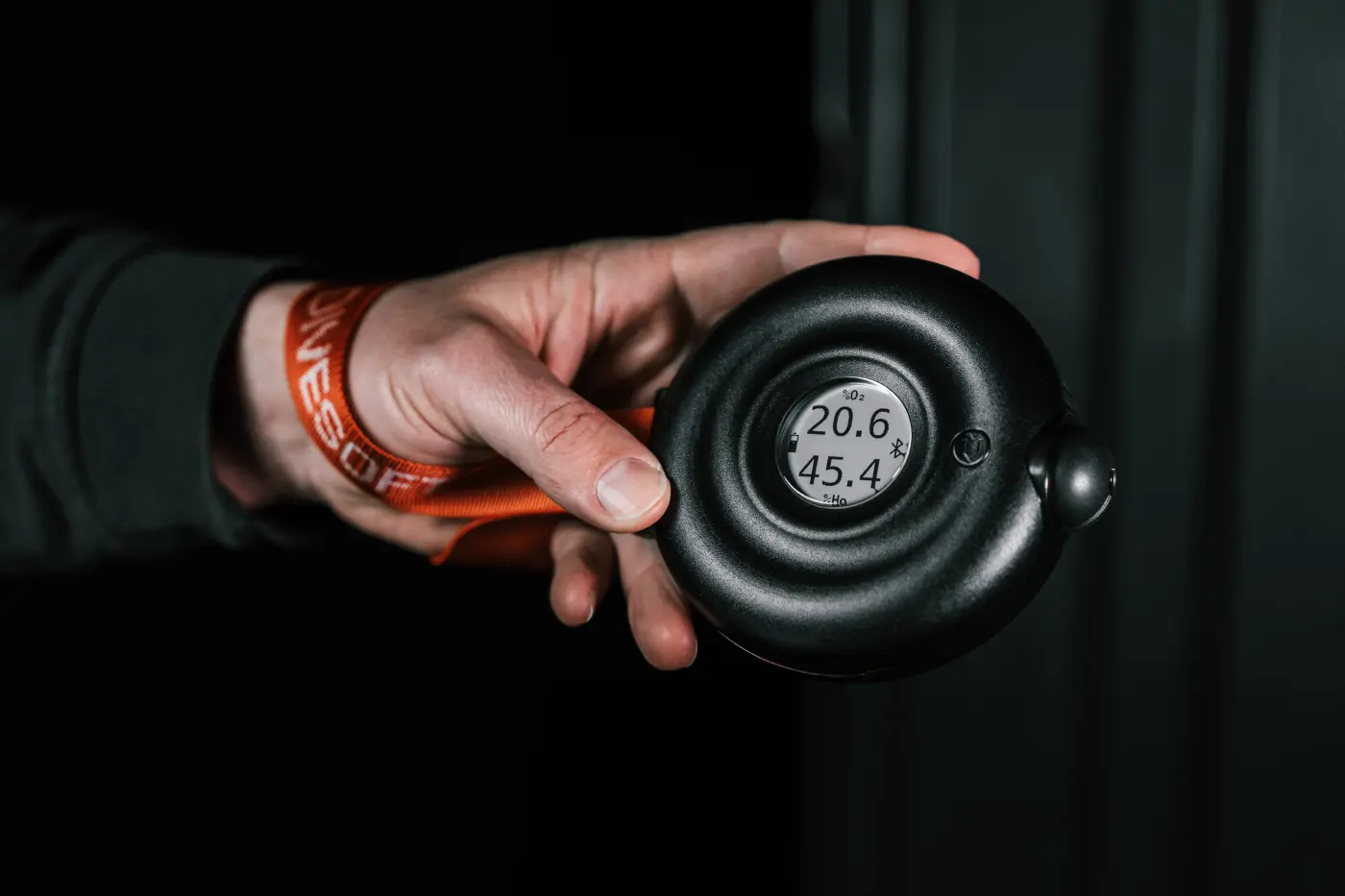
Some modern analyzers also measure helium and detect carbon monoxide in breathing gas.
Devices such as the ECHO gas analyzer combine oxygen, helium, and carbon monoxide analysis in a compact analyzer designed for regular diving and technical diving operations.
For dive centers, instructors, and technical divers handling multiple cylinders every day, this can simplify gas handling considerably.
Why Divers Still Analyze Every Cylinder
At some point, analyzing nitrox becomes part of the rhythm of diving. Connect the analyzer, check the reading, label the cylinder, and continue with dive setup.
The process feels repetitive after enough dives, but repetition is exactly what keeps mistakes from slipping through unnoticed.
Nitrox analysis takes very little time, but it remains one of the most important checks divers perform before a dive. That has not changed.
Check Your Gas With Confidence
Nitrox analysis takes less than a minute, but it helps divers enter the water knowing exactly what they are breathing.
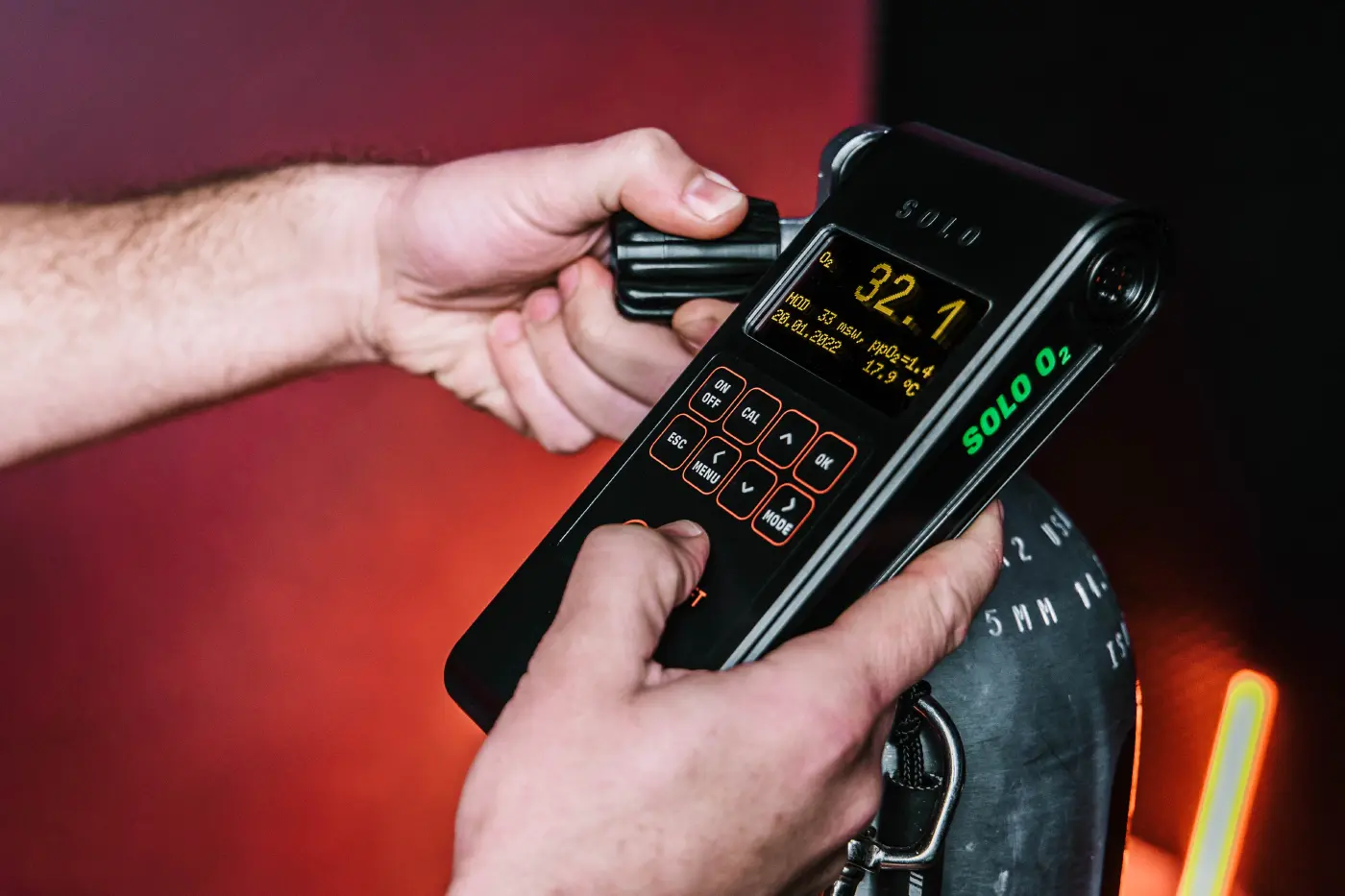
Whether you dive recreational nitrox or more advanced trimix blends, reliable gas analysis remains one of the simplest ways to reduce unnecessary risk before a dive.
Explore Divesoft analyzers designed for everyday nitrox diving, technical diving, and advanced gas analysis.
Author: Divesoft