Why Do Divers Use Rebreathers? CCR Benefits Explained.
Divers use rebreathers because they recycle breathing gas, reduce bubbles, extend useful dive time, simplify gas logistics, and create a quieter underwater experience.
Although CCRs are often associated with technical diving, many of their benefits also apply to recreational dives. Deep wrecks, cave exploration, and long decompression dives are often associated with CCR equipment. Those associations are not wrong.
Many technical divers rely on rebreathers for exactly those reasons. At the same time, a growing number of divers use rebreathers on dives that have little to do with depth. The reasons are often more practical than many people expect.
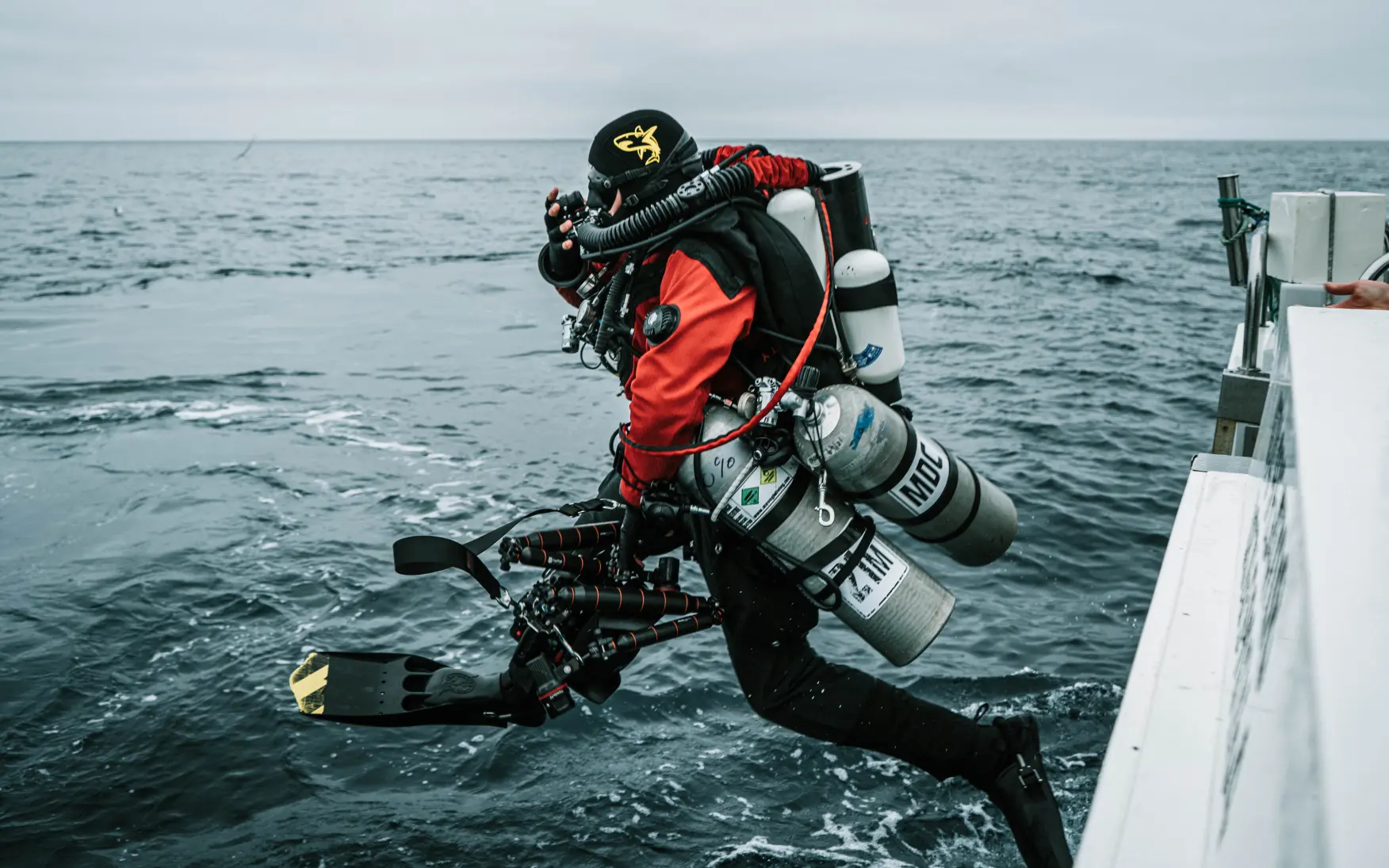
Main Reasons Divers Use Rebreathers:
- Longer useful dive time,
- lower gas consumption,
- fewer bubbles and less noise,
- warmer and more humid breathing gas,
- reduced gas logistics,
- better wildlife observation,
- optimized breathing mix during the dive.
Longer Dives Without Carrying More Gas
A rebreather recycles most of the breathing gas instead of releasing it into the water. Because oxygen consumption depends mainly on the diver's metabolism, gas use is often dramatically lower than with open-circuit scuba.
The result is not unlimited dive time. Dive duration is still affected by oxygen supply, scrubber duration, decompression requirements, water temperature, and dive planning.
What changes is that gas supply is often no longer the first factor limiting the dive. For some divers, that means more time exploring a site. For others, it simply means ending the dive because they have seen everything they wanted to see rather than because they are low on gas.
More Time in the Place You Came to See
Many dives are not about covering distance.
A photographer may spend twenty minutes waiting for a fish to return. A diver exploring a wreck may want time to examine details rather than swim quickly through the site. A marine life enthusiast may spend most of the dive watching behaviour rather than moving from one location to another.
In situations like these, efficient gas use can provide something valuable.
Time.
Not necessarily deeper dives.
Not necessarily more complex dives.
Just more time where the diver wants to be.
Warmer, More Humid Breathing Gas
This is one of the least discussed differences between open-circuit scuba and rebreathers.
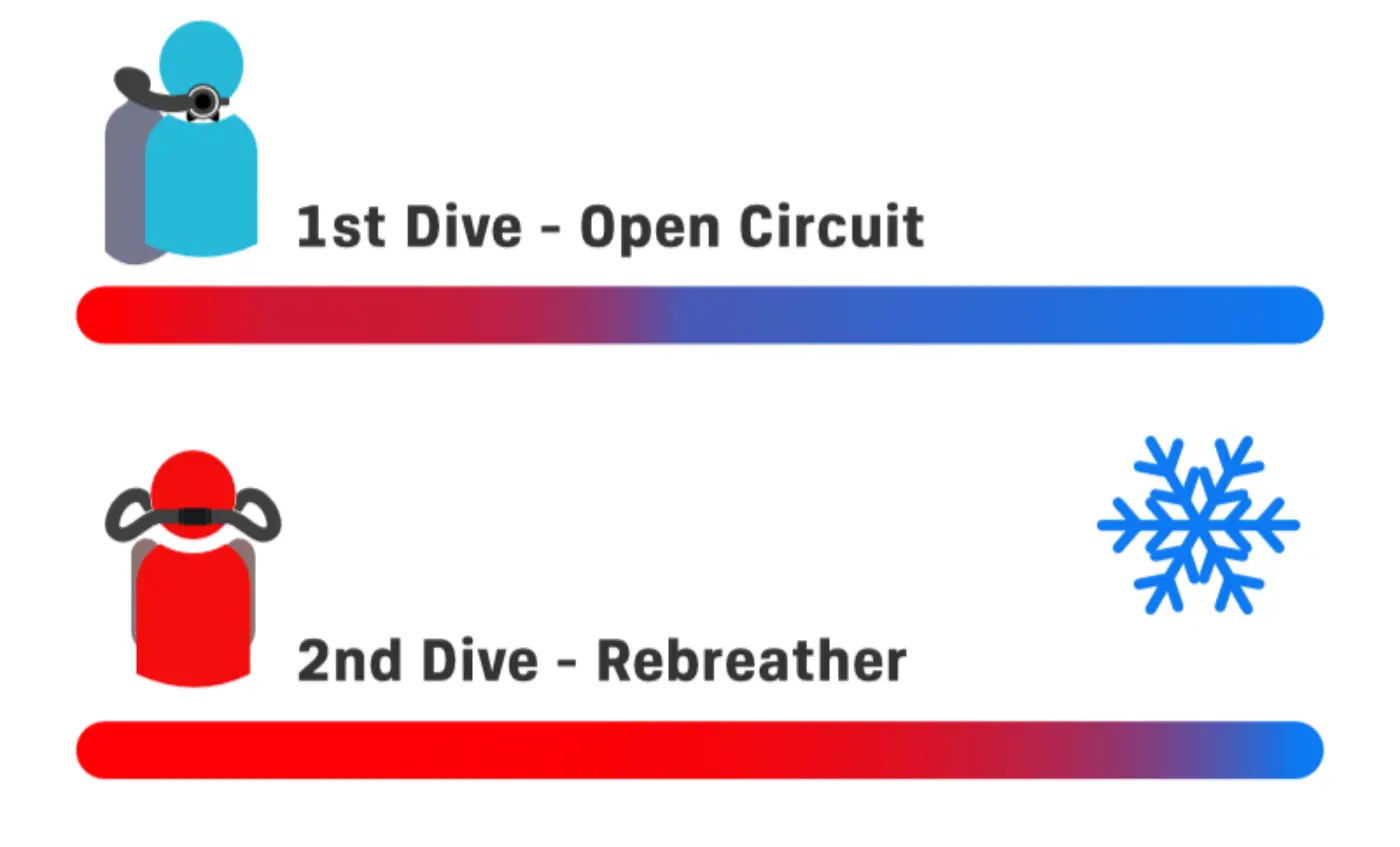
In open-circuit diving, the gas coming from the cylinder is cold and dry. When carbon dioxide is removed from the breathing loop, the chemical reaction inside the scrubber generates heat and moisture. The difference is not something every diver notices immediately. On longer dives, particularly in colder water, many divers do.
For some people, it becomes one of the things they miss most when returning to open-circuit scuba.
A Quieter Experience Underwater
Most divers are so familiar with the sound of bubbles that they stop noticing it. A rebreather changes that.
Without a continuous stream of exhaust bubbles, the dive often feels quieter. Some divers enjoy the difference straight away. Others barely think about it. Either way, the underwater environment feels different.
The change is subtle, but many divers remember it after their first few CCR dives.
Less Gas, Fewer Logistics
For technical divers, efficient gas use often means carrying less gas for a particular dive profile. For expedition teams, it can mean transporting and filling fewer cylinders. For recreational divers, the benefits are usually simpler.
Less time thinking about gas consumption. Less attention on cylinder pressure. More attention on the dive itself.
The Right Gas at Every Depth
One of the less obvious advantages of a rebreather is the ability to maintain an optimal breathing mix throughout the dive.
In open-circuit diving, the gas in the cylinder remains the same regardless of depth. Divers choose a compromise that works across the planned dive profile. A rebreather works differently.
Many experienced CCR divers describe it as a blending station on your back. As depth changes, the system continuously maintains the selected oxygen setpoint by adding oxygen when required. The result is a breathing mix that automatically changes throughout the dive.
This allows the diver to breathe a higher oxygen partial pressure during much of the dive than would normally be practical with a single open-circuit gas. The benefit is not simply efficiency. The body can absorb and release inert gases more effectively, which may reduce decompression obligations and improve the overall efficiency of the dive profile. For technical divers, this can be a significant advantage.
For recreational divers, it is often one of the reasons why a rebreather can provide more useful time underwater without requiring large amounts of breathing gas.
Not Every Advantage Is About Depth
This is where many misconceptions begin.
People often assume that rebreathers only become useful on deep technical dives. Depth is certainly one reason divers choose CCRs. It is not the only reason.
Many of the advantages associated with rebreathers can be experienced on relatively ordinary dives. A diver spending an hour on a reef may appreciate exactly the same benefits as a diver exploring a deep wreck. The dive profiles are different. The reasons for choosing the equipment may not be.

Why Some Divers Stay With Open-Circuit Scuba
Rebreathers offer advantages. They also introduce additional complexity.
More equipment.
More preparation.
More training.
More procedures.
For many divers, open-circuit scuba already does everything they need. There is nothing wrong with that. A rebreather is not the next step in every diver's progression. It is simply a different way to dive.
Different Divers, Different Reasons
Ask ten rebreather divers why they use CCRs and you will probably hear ten different answers.
Some value longer dive times.
Some value comfort.
Some value wildlife observation.
Some enjoy the technology itself.
The equipment may be the same. The reasons rarely are.
Curious About Rebreather Diving?
Learn how rebreathers work, how they differ from open-circuit scuba, and why different divers choose them for different reasons.
> What Is a Rebreather and How Does It Work?
> Why Do Divers Use Rebreathers?
FAQ
- Why do divers use rebreathers?
Divers choose rebreathers (CCRs) for different reasons. Some want longer bottom times, others appreciate lower gas consumption, quieter dives, warmer breathing gas, or simply enjoy the technology itself.
- Are rebreathers only for technical diving?
No. While closed-circuit rebreathers (CCRs) are widely used for technical diving, many divers also use them on recreational dives. The benefits are not limited to deep or decompression diving.
- Do rebreathers let you dive longer?
Often, yes. Because a rebreather (CCR) recycles breathing gas, gas supply is often no longer the first factor limiting the dive. Dive duration still depends on scrubber duration, decompression requirements, water temperature, oxygen supply, and dive planning.
- Why are rebreathers quieter than scuba?
Unlike open-circuit scuba, a rebreather (CCR) releases very few bubbles. Many divers enjoy the quieter underwater experience that comes from recycling breathing gas instead of venting every breath into the water.
- Do rebreathers use less gas?
Yes. A rebreather (CCR) replaces only the oxygen the diver consumes while recycling the remaining breathing gas. This results in dramatically lower gas consumption than open-circuit scuba.
- Are rebreathers better than open-circuit scuba?
Not necessarily. Open-circuit scuba remains the right choice for many divers. A rebreather (CCR) simply offers a different set of advantages, including lower gas consumption, quieter operation, and longer bottom times.
- Why do underwater photographers use rebreathers?
Many underwater photographers appreciate the quieter dives and reduced bubbles that come with a rebreather (CCR). These features can provide more opportunities to observe marine life without disturbing it.
- Do recreational divers use rebreathers?
Yes. Many recreational divers choose rebreathers (CCRs) for longer bottom times, quieter dives, lower gas consumption, and more time enjoying the dive site rather than thinking about gas supply.
Author: Divesoft