Rebreather vs Open Circuit: What's the Difference?
Open-circuit scuba releases each exhaled breath into the water, while a rebreather recycles most of the breathing gas inside a closed loop. That is the main difference between the two systems and it affects gas consumption, dive duration, equipment, procedures, and the overall diving experience.
Most divers begin with open-circuit scuba. It is reliable, widely available, and has introduced millions of people to diving. A rebreather approaches the same task differently. Instead of releasing every breath into the water, it recycles most of the breathing gas and replaces only the oxygen that the diver consumes.
Both systems allow divers to breathe underwater safely. The difference lies in what happens after each breath.
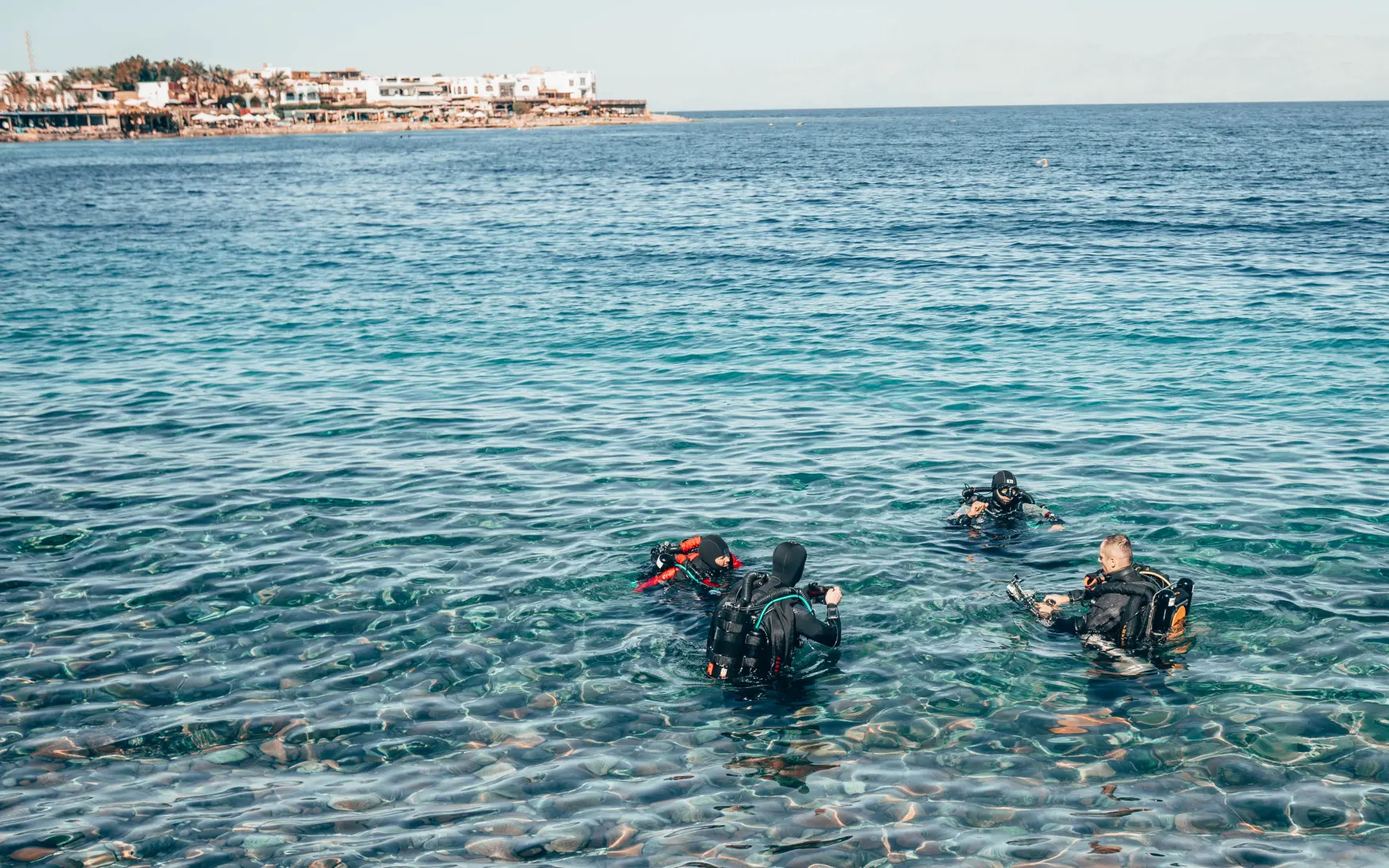
Two Different Ways to Manage Breathing Gas
In open-circuit scuba, every breath follows a simple path.
The diver inhales from a cylinder and exhales into the water.
The gas is used once and then discarded. A rebreather keeps most of the gas inside a closed breathing loop.
Carbon dioxide is removed, oxygen is replaced, and the remaining gas continues circulating through the system.
The objective remains the same.
The way the gas is managed is very different.
New to rebreathers? > What Is a Rebreather and How Does It Work?
Gas Consumption
The most obvious difference between the two systems is how much gas they use. In open-circuit scuba, every breath comes from the cylinder.
As depth increases, gas consumption increases because each breath contains a greater amount of compressed gas.
At 30 metres (98 ft), a diver consumes gas approximately four times faster than at the surface.
At 40 metres (131 ft), consumption is roughly five times higher.
A rebreather works differently.
Most of the gas remains inside the breathing loop and is reused.
Only the oxygen consumed by the diver needs to be replaced.
For that reason, oxygen consumption depends mainly on workload rather than depth alone.
Typical Gas Consumption
The difference becomes even clearer when comparing a diver with a surface air consumption (SAC) rate of 22 litres per minute.
| Depth | Open Circuit (SAC 22 l/min) | Rebreather |
|---|---|---|
| 10 m (33 ft) | 44 l/min | ~1.5 l/min |
| 20 m (66 ft) | 66 l/min | ~1.5 l/min |
| 30 m (98 ft) | 88 l/min | ~1.5 l/min |
| 40 m (131 ft) | 110 l/min | ~1.5 l/min |
| 50 m (164 ft) | 132 l/min | ~1.5 l/min |
Typical values based on a diver with a SAC rate of 22 litres per minute. Actual gas consumption varies with workload, breathing rate, equipment configuration, and dive conditions.
Why Rebreather Oxygen Use Is Different
While open-circuit gas consumption increases significantly with depth, the oxygen requirements of the human body remain relatively constant. Whether a diver is at 10 metres or 100 metres, the body still consumes roughly the same amount of oxygen to support metabolism.
That difference is one of the reasons rebreathers can use gas so efficiently.
Learn more about why efficient gas use matters > Why Do Divers Use Rebreathers?
What Changes During the Dive?
For many divers, the first noticeable difference is the absence of a continuous stream of bubbles.
Open-circuit scuba produces bubbles with every exhalation.
A rebreather produces very few.
The underwater environment often feels quieter as a result.
Gas management changes as well.
Open-circuit divers regularly monitor cylinder pressure throughout the dive.
Rebreather divers monitor the condition of the breathing loop and the oxygen concentration within the system.
The priorities are different because the systems work differently.
One Dive, Three Divers
Imagine three divers visiting the same wreck at 50 metres (164 ft).
Each wants to spend approximately 20 minutes exploring the site.

The Recreational Diver
This diver uses standard open-circuit scuba.
Gas consumption at this depth is significant, so bottom time is heavily influenced by available gas reserves and decompression requirements.
The diver explores the wreck and begins the ascent according to the planned gas limits.
The Technical Open-Circuit Diver
This diver uses open-circuit equipment as well but carries additional cylinders.
The extra gas allows for a longer and more flexible dive profile.
The trade-off is increased equipment volume and additional logistical planning.
The CCR Diver
This diver uses a closed-circuit rebreather.
Because oxygen consumption remains relatively low throughout the dive, gas supply is less likely to become the primary limitation.
The diver can often spend more time on the site while carrying significantly less breathing gas than an equivalent open-circuit configuration.

The objective is the same.
The equipment reaches it differently.
Bottom Time and Decompression
Longer bottom times are often associated with rebreathers.
In many situations, that association is justified.
Because gas is used more efficiently, the diver is less likely to end the dive simply because a cylinder is running low.
That does not mean dive duration becomes unlimited.
Scrubber duration, oxygen supply, decompression requirements, water temperature, and dive planning still determine how long a dive can last.
The difference is that gas supply is often no longer the first limiting factor.
Wondering how long a rebreather can stay underwater? > How Long Can You Stay Underwater With a Rebreather?
Repetitive Diving
The differences between the two systems often become even more noticeable over multiple dives.
After a dive, an open-circuit diver will eventually need to refill or replace cylinders before entering the water again.
A rebreather diver operates very differently.
Because oxygen and diluent consumption are so low, a single fill often supports several dives before any gas needs to be added.
For many recreational dive profiles, it is entirely normal to complete three or four dives on the same oxygen and diluent fills.
Even on deeper or more demanding dives, a single fill may comfortably support two dives or more.
As a result, many CCR divers finish a day of diving without adding any gas at all between dives.
The breathing loop remains assembled and ready for the next dive.
That does not eliminate preparation or checks.
A rebreather still requires careful attention and pre-dive verification.
However, during a week of repetitive diving from a liveaboard or dive resort, many CCR divers appreciate spending less time managing cylinders and more time focusing on the dives themselves.
The advantage is not simply that less gas is consumed.
It is that gas logistics often become almost irrelevant during normal day-to-day diving.
Emergency Situations
Another difference becomes apparent when something does not go according to plan.
In open-circuit scuba, breathing gas is a finite resource that can be consumed very quickly during periods of stress.
A diver dealing with an unexpected situation may see gas consumption increase dramatically.
At depth, that increase becomes even more significant because every breath contains a larger volume of compressed gas.
A rebreather diver is not immune to stress and still needs to manage the situation correctly.
However, because oxygen consumption depends primarily on metabolism rather than depth, increased breathing rate has a much smaller effect on the available oxygen supply.
For that reason, a rebreather often provides more time to manage a problem before gas supply becomes a concern.
Complexity
Open-circuit scuba is one of the simplest ways to dive.
A rebreather introduces additional equipment, monitoring requirements, and procedures.
The diver must understand oxygen control, breathing loop management, scrubber duration, and emergency procedures.
This additional complexity is one reason rebreathers require dedicated training.
The benefits and responsibilities increase together.
Rebreather vs Open Circuit at a Glance
|
Rebreather (Closed Circuit)
|
Open-Circuit Scuba
|
Which System Is Better?
For most experienced divers, that is not the right question.
Open-circuit scuba remains the preferred choice for millions of dives every year.
It is reliable, widely available, and suitable for an enormous range of diving activities.
Rebreathers offer a different approach to gas management and a different diving experience.
The best choice depends on the objectives of the dive and the preferences of the diver.
One system is not replacing the other.
Both continue to serve different purposes in modern diving.
Explore More About Rebreather Diving
Explore the practical reasons divers choose CCRs, from longer dives and reduced gas consumption to comfort and underwater observation.
Learn how the breathing loop, scrubber, oxygen sensors, and diluent work together inside a CCR.
Understand the factors that determine dive duration, including oxygen consumption, scrubber duration, workload, and dive planning.
Discover why many CCR divers spend most of their time well within recreational depth limits.
Learn why photographers, filmmakers, and wildlife observers often appreciate quieter dives and longer observation times.
FAQ
- What is the main difference between a rebreather and open-circuit scuba?
A closed-circuit rebreather (CCR) recycles breathing gas inside a breathing loop, while open-circuit scuba releases every exhaled breath into the water. The main difference is how each system manages breathing gas.
- Does a rebreather use less gas than open circuit?
Yes. A rebreather (CCR) replaces only the oxygen the diver consumes, while most of the remaining gas is recycled. As a result, it uses significantly less gas than open-circuit scuba, especially as depth increases.
- Is a rebreather better than open-circuit scuba?
Not necessarily. Open-circuit scuba is simpler and suitable for a wide range of dives. A rebreather (CCR) offers different advantages, including lower gas consumption, longer bottom times, and quieter operation, but it also requires dedicated training and more preparation.
- Why do rebreathers allow longer dives?
Because a rebreather (CCR) uses breathing gas much more efficiently than open-circuit scuba. On many dives, gas supply is no longer the first factor limiting bottom time.
- Are rebreathers harder to use than scuba?
Yes. CCR diving involves more equipment, more pre-dive preparation, and continuous monitoring throughout the dive. That additional complexity is one of the reasons rebreathers require dedicated training.
- Do rebreathers produce bubbles?
Yes, but far fewer than open-circuit scuba. Because a closed-circuit rebreather recycles most of the breathing gas, only small amounts of gas are normally released.
- Is CCR diving suitable for recreational divers?
Yes. Although CCR diving is widely used in technical diving, many recreational divers also choose a rebreather for longer bottom times, quieter dives, and more time at the dive site.
Curious About Rebreather Diving?
Learn how rebreathers work, how they differ from open-circuit scuba, and why different divers choose them for different reasons.
> What Is a Rebreather and How Does It Work?
> Why Do Divers Use Rebreathers?
Author: Divesoft