Why Recreational Divers Use Rebreathers
Recreational divers use rebreathers because CCRs can provide longer useful dive time, fewer bubbles, warmer breathing gas, reduced gas logistics, and a quieter underwater experience — even on dives that stay well within recreational depth limits.
Mention rebreathers and most divers immediately think of deep wrecks, caves, and long decompression dives. That reputation is well deserved. Modern CCRs have helped divers reach places that would be difficult or impractical using conventional open-circuit equipment.
What is discussed less often is that many of the advantages associated with rebreathers can be experienced long before a diver reaches technical depths. You do not need a cave, a deep wreck, or a complex decompression schedule to understand why some recreational divers choose CCRs.
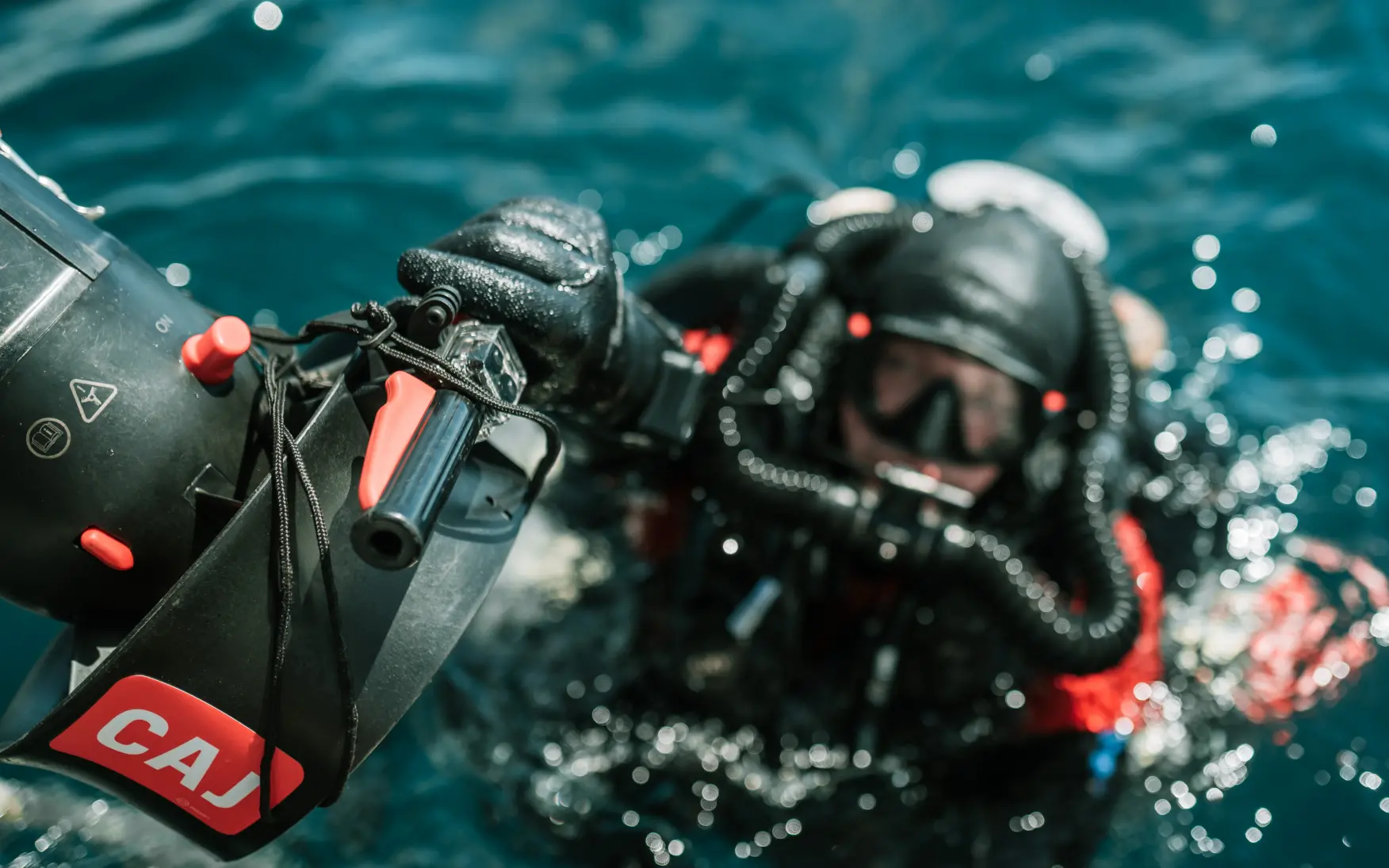
The Benefits Start Long Before Technical Depths
Many divers assume that rebreathers only become useful once a dive moves beyond recreational limits. That assumption is understandable. Deep wrecks, cave exploration, and long decompression dives are among the most visible uses of CCR technology.
Yet many of the advantages associated with rebreathers can be experienced long before a diver reaches technical depths. A rebreather does not need a deep wreck, a cave, or a complex decompression schedule to make sense. Some of its most noticeable characteristics can be appreciated on entirely ordinary dives.
A Different Way to Dive
Imagine a diver exploring a wreck at 30 metres (98 ft). The goal is simple. Spend as much time on the wreck as possible and see as much of it as possible.
With conventional open-circuit scuba, gas supply quickly becomes one of the main limitations. Staying longer usually means carrying more cylinders, increasing both equipment volume and logistical complexity. A rebreather approaches the same dive differently.
Instead of discarding every exhaled breath into the water, it recycles most of the breathing gas and replaces only the oxygen consumed by the diver. The result is not unlimited dive time. The result is a very different relationship with gas consumption.
One Wreck, Three Divers
Imagine three divers visiting the same wreck at 30 metres (98 ft) in warm tropical water. All three want to return to the boat within one hour.
- Diver A uses a standard recreational open-circuit setup with a single 12-litre cylinder filled with air.
- Diver B dives open circuit as well, but carries a twinset consisting of two 12-litre cylinders.
- Diver C uses an electronically controlled rebreather with air diluent.
At first glance, all three divers are visiting exactly the same wreck. The difference is how much time they can actually spend exploring it.
Diver A – Recreational Open-Circuit Scuba
Diver A is limited primarily by gas supply.
Using a 12-litre cylinder, a surface consumption rate of 22 litres per minute, and maintaining a reserve of 30 bar, the diver can spend only about 20 minutes on the wreck before beginning the ascent.
The dive then requires approximately 18 minutes of ascent and decompression. That means almost as much time is spent leaving the wreck as exploring it.
Time on the wreck: 20 minutes
Ascent and decompression: 18 minutes
Total dive time: 38 minutes
Diver B – Open-Circuit Twinset
Diver B carries significantly more gas.
The twinset provides enough reserve to complete a full one-hour dive and still reach the surface with approximately 70 bar remaining. However, gas volume is not the only factor that determines dive duration.
To return to the boat within the planned hour, Diver B can spend only about 26 minutes exploring the wreck because approximately 34 minutes are required for ascent and decompression when diving on air. Using Nitrox instead of air could extend the bottom time by as much as 9 additional minutes, but the diver still spends a substantial part of the dive away from the wreck itself.
Time on the wreck: 26 minutes
Ascent and decompression: 34 minutes
Total dive time: 60 minutes
Diver C – Rebreather Diver
Diver C faces a very different situation.
Because a rebreather recycles breathing gas and only replaces the oxygen actually metabolised by the diver, gas supply is rarely the primary limitation on a dive like this. The diver typically spends around 45 minutes exploring the wreck while still returning to the boat within the same one-hour schedule.
Even more interesting is the decompression profile. Despite spending much longer at depth, the ascent and decompression require only about 15 minutes. The diver returns to the boat at the same time as Diver B but has enjoyed considerably more time where the dive actually happens.
Time on the wreck: 45 minutes
Ascent and decompression: 15 minutes
Total dive time: 60 minutes
Comparing the Three Dives
The wreck is identical. The difference is how each breathing system manages gas and decompression.
Compared with Diver A, the rebreather diver spends 25 additional minutes exploring the wreck while actually spending 3 minutes less on ascent and decompression.
Compared with Diver B, the rebreather diver gains 19 additional minutes on the wreck while reducing ascent and decompression time by 19 minutes.
In practical terms, Diver C spends nearly twice as much time exploring the wreck as Diver A and significantly more time than Diver B, despite all three divers returning to the boat within the same overall schedule.
The advantages continue after the dive.
While Diver B now needs to refill or replace cylinders before the next dive, the rebreather diver typically leaves the breathing loop assembled, performs the required checks, and only tops up the onboard cylinders as necessary.
The same benefit applies throughout a day of repetitive diving.
More Time When Things Do Not Go According to Plan
There is another aspect that is often overlooked. If something unexpected happens on the wreck, the amount of available breathing gas suddenly becomes extremely important.
Diver A has limited time available to diagnose and solve the problem before gas reserves become critical.
Diver B has more options thanks to the larger gas supply, but the situation is still governed by gas consumption.
The rebreather diver is in a very different position. Even under stress, when breathing rates can increase to 50–70 litres per minute, the effect on rebreather gas endurance is far smaller than it would be with open-circuit scuba.
At 30 metres, an open-circuit diver breathing at 60 litres per minute on the surface effectively consumes around 240 litres of gas per minute. Gas reserves disappear surprisingly quickly under those conditions.
A rebreather does not eliminate emergencies, but it can provide considerably more time to manage them before gas supply becomes the limiting factor.
| Aspect | Diver A Open-Circuit (12L) |
Diver B Twinset (2×12L) |
Diver C Rebreather |
|---|---|---|---|
| Equipment | Single 12L cylinder, air | Two 12L cylinders, air or Nitrox | Electronically controlled rebreather |
| Time on Wreck | 20 minutes | 26 minutes (35 min with Nitrox) | 45 minutes |
| Ascent & Decompression | 18 minutes | 34 minutes | 15 minutes |
| Total Dive Time | 38 minutes | 60 minutes | 60 minutes |
| Primary Limitation | Gas supply | Gas supply & decompression | Neither (abundant supply) |
| After the Dive | Cylinder needs refilling | Cylinders need refilling/replacement | Loop stays assembled, only top up cylinders |
| Repetitive Diving | Limited by gas refill | Limited by gas refill | Minimal downtime between dives |
| Gas Reserve (stress) | Very limited at depth | Limited at depth | Substantial even under stress (50-70 L/min breathing) |
| Comparison to Diver A | — | +6 min on wreck, +16 min decompression | +25 min on wreck, -3 min decompression |
More Time Where the Dive Is Actually Happening
Many recreational dives are not remembered because of the descent. Or the ascent. They are remembered because of what happened in between.
A reef covered in life.
A turtle feeding on a coral head.
A small wreck hiding details that are easy to miss on a shorter dive.
A rebreather does not make these things happen.
What it can do is reduce the amount of gas lost with every breath, allowing the diver to spend more time where the interesting part of the dive is actually happening.
Less Time Thinking About Gas
Something interesting happens when gas supply is no longer the first thing driving every decision during a dive.
The diver still follows the dive plan.
The diver still monitors the equipment.
The diver still maintains appropriate reserves.
But the focus often shifts. Instead of regularly calculating how much gas remains and how much can be spent, the diver can devote more attention to the dive itself.
For many recreational CCR divers, that change becomes noticeable surprisingly quickly. The goal is not to ignore gas. The goal is that gas no longer dominates every decision underwater.
Repetitive Dives Become Simpler
Many recreational divers make several dives a day while travelling, diving from liveaboards, or spending a week at a resort.
After each dive, open-circuit cylinders eventually need to be replaced or refilled before the next one can begin. A rebreather works differently.
Because gas consumption is so low, the onboard cylinders often require only small top-ups between dives. The breathing loop remains assembled and ready for the next dive. That does not eliminate preparation or checks. A rebreather still requires careful attention.
But during a week of repetitive diving, many CCR divers appreciate spending less time dealing with large volumes of breathing gas and more time preparing for the next dive.
Warmer, More Comfortable Breathing Gas
The benefits do not end with gas efficiency. When carbon dioxide is removed from the breathing loop, the chemical reaction inside the scrubber generates heat and moisture. As a result, the diver breathes gas that is warmer and more humid than the gas supplied by an open-circuit regulator.
Many divers do not notice the difference immediately. On longer dives, especially in colder water, they often do. One diver compared the effect by conducting two identical dives in a lake at 4°C (39°F). Both dives lasted 45 minutes at a depth of 20 metres (66 ft).
The first dive was completed using open-circuit scuba. The second used a rebreather.
During the first dive, the diver began feeling cold after approximately 30 minutes. During the second dive, the feeling of cold did not arrive until the very end of the dive.
The dive profile was the same. The breathing system was not.
Closer to Marine Life
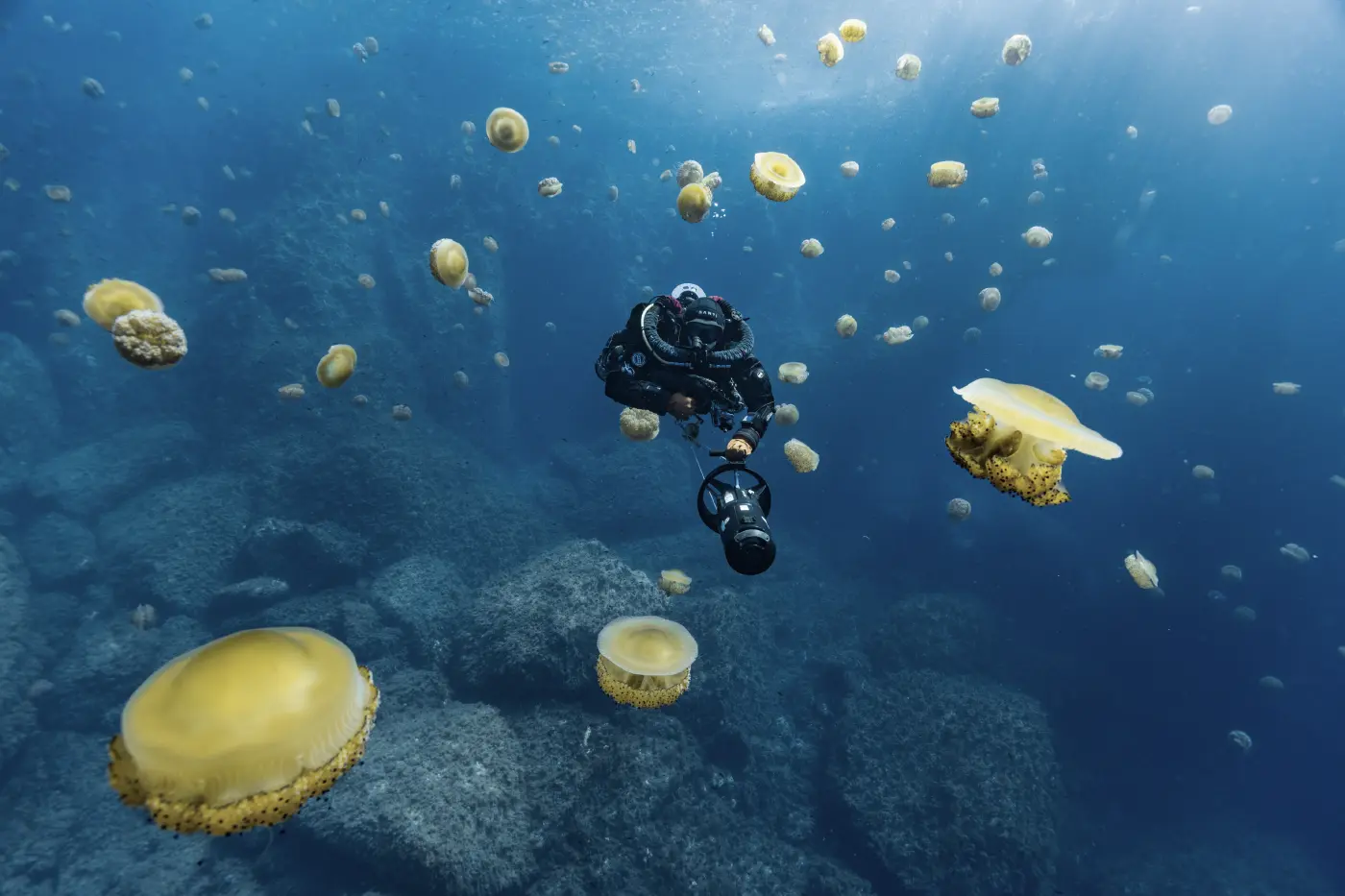
Another characteristic often appreciated by recreational divers, photographers, and naturalists is the absence of continuous exhaust bubbles. Instead of releasing exhaled gas into the water, the rebreather returns it to the breathing loop.
The result is a quieter underwater presence. Marine life does not always react the same way to divers. Many experienced CCR divers notice that some animals appear less disturbed by the absence of bubbles and noise. The result is not guaranteed. But it is one of the reasons underwater photographers and wildlife enthusiasts often become interested in rebreathers.
Not Just for Technical Divers
This is perhaps the most common misconception surrounding rebreathers. Yes, they are exceptional tools for technical diving. But many of the characteristics that attract divers to CCRs have little to do with depth.
Longer time at a site.
Reduced gas consumption.
Warmer breathing gas.
A quieter underwater environment.
These things can be appreciated on entirely ordinary recreational dives. That is why some divers choose rebreathers even when they have no intention of diving beyond recreational limits.
A Rebreather Is Not for Everyone
Rebreathers offer advantages. They also require commitment. Additional training, preparation, equipment checks, and regular practice are all part of CCR diving.
For many recreational divers, open-circuit scuba remains the best choice. It is simple, widely available, and capable of supporting an enormous range of diving activities. Choosing a rebreather is not about replacing open-circuit scuba.
It is about deciding whether the characteristics of CCR diving match the type of diving a person enjoys.
Curious About Rebreather Diving?
Learn how rebreathers work, how they differ from open-circuit scuba, and why different divers choose them for different reasons.
> What Is a Rebreather and How Does It Work?
> Why Do Divers Use Rebreathers?
FAQ
- Do recreational divers use rebreathers?
Yes. Many recreational divers use rebreathers (CCRs) on reefs, walls, and wrecks well within recreational depth limits. They choose them for the diving experience, not because they plan to dive deeper.
- Are rebreathers only for technical diving?
No. Although closed-circuit rebreathers (CCRs) are widely associated with technical diving, many divers use them on recreational dives to enjoy longer bottom times, quieter dives, and more time at the dive site.
- Why would a recreational diver choose a CCR?
A recreational diver may choose a rebreather (CCR) for longer bottom times, lower gas consumption, quieter operation, warmer breathing gas, and a different underwater experience.
- Can a rebreather extend recreational dive time?
Often, yes. Because a rebreather (CCR) uses breathing gas much more efficiently, gas supply is less likely to limit the dive. Other factors, such as decompression requirements and dive planning, still apply.
- Are rebreathers useful on shallow dives?
Yes. Many of the benefits of a rebreather (CCR), including quieter operation, efficient gas use, and warmer breathing gas, can be enjoyed on shallow recreational dives.
- Do rebreathers make repetitive dives easier?
Often, yes. Because oxygen and diluent consumption are low, many CCR divers can complete several recreational dives before adding more gas.
- Are rebreathers suitable for underwater photography?
Yes. Many recreational photographers use rebreathers (CCRs) because fewer bubbles and less noise allow them to spend more time observing marine life.
- Is a rebreather better than open-circuit scuba for recreational diving?
Not necessarily. Open-circuit scuba remains the right choice for many divers. A rebreather (CCR) simply offers a different diving experience, with advantages that some recreational divers value.
Author: Divesoft